

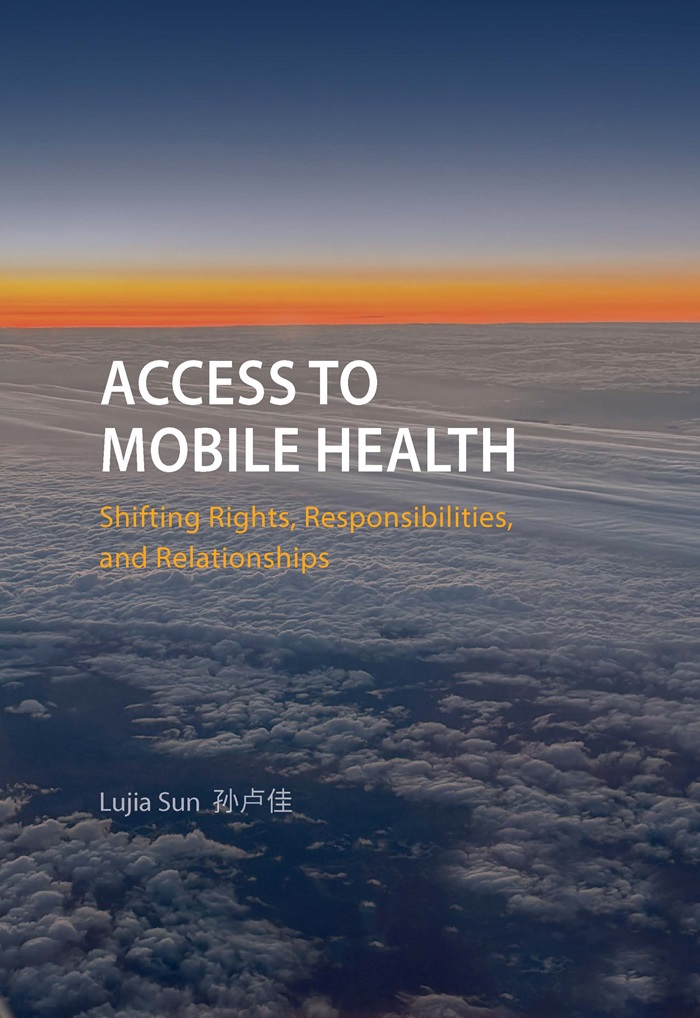
The future of healthcare is digital, according to the World Health Organisation. From wearable sensors and virtual care clinics to AI-driven diagnostics, digital health holds promise for universal health coverage. However, real challenges remain in its development and implementation, particularly in meeting the fundamental healthcare needs of vulnerable groups, including older adults, people living in remote areas and patients with chronic diseases. Grounded in the right to health under Article 12 of the International Covenant on Economic, Social and Cultural Rights and in core bioethical principles, the dissertation of Lujia Sun integrates empirical findings with theoretical frameworks to examine how mobile health shifts rights, responsibilities and relationships. The dissertation comprises two parts: case studies from China and a broader analysis of digital health challenges across different settings. The first part focuses on mobile health and the protection of individual rights within China’s healthcare system, examining key legal and ethical dimensions, including the right to health, justice and data privacy. The second part addresses healthcare consumerism and the rising individual responsibility in a broader digital health context, applying the ethical principle of autonomy. Findings from case studies in China indicate a tension between the commodification of mobile health and equitable access in the private sector. They show that substantive accessibility is necessary for individuals to have genuine capabilities to benefit from mobile health, rather than merely technical access. Considering increasing misuse of health data, the dissertation also identifies that China’s health data governance framework should be strengthened to better reconcile fundamental individual rights with private and public interests. The analysis of the broader digital health context suggests a potential shift toward healthcare consumerism, with increasing emphasis on choice, efficiency and individual responsibility. This development may challenge shared decision-making and reshape relationships among patients, physicians and the broader system. The dissertation contributes normative insights, arguing for a conceptual shift from an individualistic to a more relational understanding of mobile health. Access to mobile health is not an isolated individual act, but a process shaped by interpersonal relationships and social determinants of health. It develops a new framework that combines the Capability Approach with the right to health. It further suggests a collective approach to responsibilities in evolving digital health environments, recognising the roles of physicians, patients, technology developers and communities.
Supervisors: prof. dr. Martin Buijsen, dr. Ageeth Klaassen, and dr. André den Exter. Lujia defended her thesis on the 10th of July 2026, at Erasmus University Rotterdam.
Lujia Sun
Access to Mobile Health: Shifting Rights, Responsibilities and Relationships
ISBN 978 90 361 0857 7
The thesis is available in the repository of Erasmus University Rotterdam: